



High on filler.

A recent New York Post article discusses for the first time the phenomenon of “filler blindness”. This refers to the psychological “blindness” experienced by those who undergo repeated aesthetic treatments, progressively losing the ability to perceive changes in their own face, normalizing exaggerated proportions, and continuing to request more and more touch-ups, leading to a growing detachment between themselves and their actual mental image.
“Love Island Face”: the trend alarming experts
The ‘case’ exploded in the media following the broadcast of the 7th season of Love Island USA, the dating show where a group of singles, isolated in a dream villa without clocks, are forced to “re-couple” in every episode to form the pair that wins the final prize.
This year, it was the contestants' faces that captured attention: foreheads “frozen” by Botox, overfilled lips, and razor-sharp jawlines. A new aesthetic standard of “filler overdose” replicated on every contestant's face, to the point of making them look like carbon copies of one another.
In the US, the media coined the term “Love Island Face” to describe this trend among many in Gen Z (the first generation born during the boom of mass aesthetic medicine and surgery): a generation raised on selfies and the tendency to make their faces look more and more like an Instagram filter, with aesthetic results that are often counterproductive in real life.
According to Dr. Angela Sturm, a facial plastic surgeon, the “villa look” (the villa where the reality show takes place) is saturated with filler.
In your opinion, do the stars of the dating show "look older than they are, and will we continue to see filler migration and this phenomenon of ‘filler blindness’?".
The effect of these excesses, according to many experts, is aesthetically counterproductive: "It’s like makeup. Certain looks might seem okay in photos, but they don't look natural in person or on video", commented Sturm.
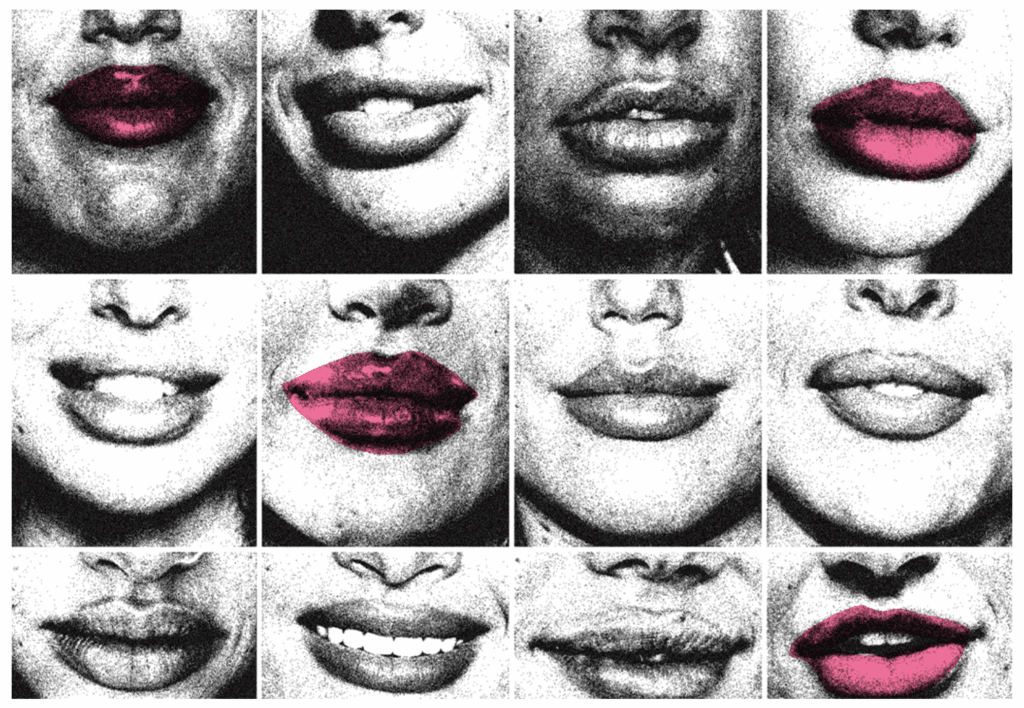
Do I actually like how I look, or is it just an effect of the algorithm?
Going to a cosmetic surgeon to become a replica of a trending face.
Where does this need come from?
According to psychologists, it is a shortcut to true self-acceptance: the search for security perceived by our culture through conformity.
Social media algorithms keep showing us the same faces, creating what psychologists call the ‘mere exposure effect’ (mere exposure effect). At a certain point, we start to prefer what we see most often.
From a sociological perspective, this trend also reflects the an attempt at control of the new generations, who are frightened by an uncertain and constantly changing landscape.
For young people facing economic instability, climate anxiety, and political chaos, the aesthetic medicine clinic can seem like the only place where a desired result is guaranteed.
Towards a return to "natural beauty"
But every trend, cyclically, gives way to a counter-trend.
In America, too, there are new generations of patients seeking from aesthetic medicine more natural effects. The "tweakment" that isn't obvious, but makes one's appearance more harmonious and works preventively on skin quality, with a pro-aging perspective.
“I think we are entering an era of transparency, of filler reversal, especially for lips and cheeks” – recently commented to the New York Post Dr. Lanna Cheuck. "The industry is truly shifting toward more natural and regenerative procedures".

“You. Better”: the BTX Bar method
At BTX Bar Italia, we prefer to interpret this not simply as a trend—though for once, it is one we are happy to embrace—but as concrete evidence that patients are becoming increasingly aware, critical, and informed regarding the aesthetic medicine sector.
You can have "work done" without being "overdone." Because—as we always say—for us, the best aesthetic result is the one that is there, but cannot be seen.